
Learn why it is important to have a maximum of 500 kPa water pressure in your home.
Do pressure reduction valves prevent water hammer and knocking in pipes?
High water pressure in small pipes increases the velocity/speed/flow rate of the water moving through those pipes. When you turn off a tap, that flow stops suddenly inside the pipes. This shock wave can cause a knocking noise or make pipes rattle against the supporting structures they are secured to in the wall.
Some claim that water hammer and knocking in pipes can always be resolved by installing a pressure reduction valve.
In our experience, this is not always true. In a small number of cases where the water pressure is already under 500 kPa, you may still have knocking, and a plumber is needed to find the root cause.
Do pressure reduction valves increase your chances of a warranty claim for faulty plumbing products?
The product installation guide will set out the minimum and maximum operating pressures for that specific product. Modern plumbing products have been designed to operate at pressures not exceeding 500kPa.
For example, if you have a warranty issue and the product manufacturer’s warranty technician does a pressure test at your house and finds the water pressure exceeds 500 kPa, the manufacturer may not honour their warranty. This applies even if the issue is pressure-related.
Do pressure reduction valves increase your chances of a successful insurance claim?
Insurers can legally deny a claim for property damage caused by a plumbing fault if the plumbing installation did not comply with Australian standards or manufacturers’ installation guides.
If the damage is severe, insurers may check the product’s installation guide and plumbing approvals for compliance.
Can pressure reduction valves help balance the flow rate and pressure between hot and cold piping systems?
Many hot water systems require the cold-water inlet pressure to be no more than 80% of the relief valve setting. The easiest way for a plumber to achieve this is to install a pressure limiting valve on the cold-water inlet to the hot water system.
However, this creates a pressure and flow rate imbalance between the hot and cold water supply to taps.
This imbalance can make it difficult to adjust the water temperature at some taps and can cause large temperature swings when you turn on an additional hot water tap at the same time. You usually notice this imbalance in the shower.
When you install a reduction valve at the main cold water pipe inlet to the dwelling, you can remove the pressure-limiting valve from the cold inlet to the hot water system. With one pressure reduction valve, the hot and cold water pressures and flow rates should always be similar.
Do pressure reduction valves help save water?
Lower water pressure means lower flow rates over a set period. For example, a kitchen tap with 800kPa water pressure may allow 20 litres of water per minute to flow through it.
The same tap at 500kPa may have a reduced flow rate of 12 litres per minute. This is good if you are rinsing vegies. This is not so good if you are trying to fill a kitchen sink quickly.
Will a pressure reduction valve reduce the stress on modern water pipes and fittings?
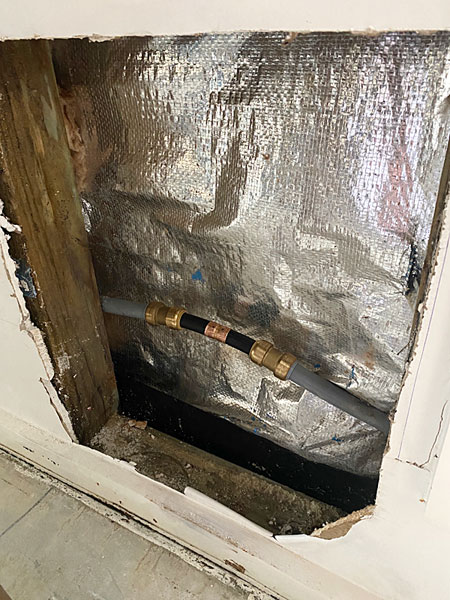
High water pressures put a lot of stress on crimped joints and O-ring joints. These joints are less durable than threaded and welded joints.
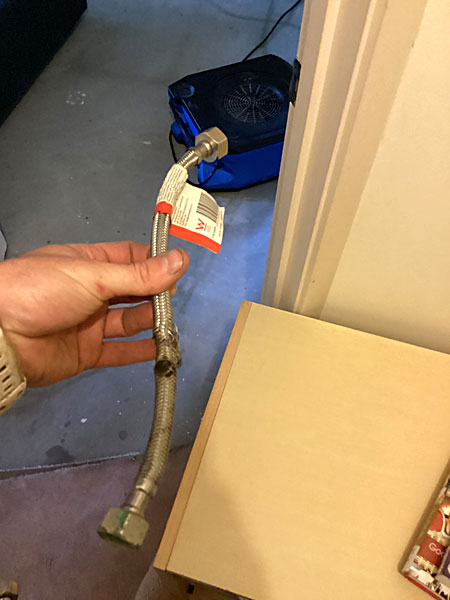
Some newer pipe fittings have been moulded in plastic. While investigating the cause of some water leaks, we discovered that several moulded plastic fittings have fractured.
High pressures cause composite pipes to stretch and stress, eventually splitting and leading to water leaks.
High water pressure can cause pipes to move against their fixing points or against rough wall surfaces. This abrasion wears the pipe walls thin enough to leak.
How is a pressure reduction valve different to a pressure limiting valve?
A pressure reduction valve lets the installer adjust and set water pressure to a fixed limit. Pressure reduction valves typically have an adjustable range between 100kPa and 600kPa.
A pressure limiting valve has a fixed outlet pressure that can not be adjusted. Pressure limiting valves are available with outlet pressures of 350 kPa, 500 kPa, and 600 kPa.
Where is the best place to install a pressure reduction valve?
The best place to install a pressure reduction valve is directly after the utility’s water meter or directly after the main cold water stop cock for units and apartments without water meters.
When installing a pressure reduction valve in Canberra or Queanbeyan, consider installing it below ground or in a well-insulated location. This will prevent freezing.
Because of limited space, ICON Water prefers, when possible, that pressure reduction valves not be installed in the water meter box.